AI agents are shipping faster than companies are ready. Grain closes the gap.

Grain gets supply chain and distribution companies ready to run AI agents in production, not in a demo. It starts with a two-week Readiness Diagnostic at a fixed price: the data behind one decision, audited at the level an agent acts on, and a baseline your CFO would sign.

  • Built from the inside.Run by the practitioner who ships production AI in a Fortune 200 supply chain.
  • Starts at the row.Where agents actually break, before any model or platform decision.
  • Scored in dollars.A baseline a CFO would sign, or the work doesn't start.

grainnoun In data modeling, the grain is the level of detail at which one row is true: one shipment, one pallet, one SKU in one warehouse on one day. Dashboards hide the grain. Agents act at it. If nobody in your company can state the grain of the data an agent will touch, the agent will decide it for you, and it will be wrong.

Why the demo works and the rollout doesn't.

Three things are true of almost every stalled agent program. None of them is a model problem.

  • The pilot had a person under it.

    A sharp analyst was quietly fixing inputs, catching bad outputs, and smoothing the exceptions. Take the person away and the pilot falls over, which is why it never left the sandbox.

  • The data was clean on the dashboard.

    Monthly rollups look fine. The agent needs the Tuesday 2 p.m. row for one dock door at one facility, and that row is missing, late, or disputed by the people who live with it.

  • Nobody owned the decision.

    Agents make decisions. When no one can say who approves, who overrides, and who gets paged when it's wrong, the agent stays a demo. Not because it's unsafe, but because it's unowned.

What the gap looks like.

Model capability compounds every quarter. Enterprise readiness moves at the speed of ownership, which is slow. The distance between a demo and a production baseline is where pilots stall.

All three problems above live in that distance. Readiness is fixable, and it is cheaper than the next platform.

The same agent program as a demo, and as a production baseline.
DimensionBefore (Demo)After (Production Baseline)
Data Monthly rollups that look clean on the dashboard. The row an agent acts on: owned, fresh, checked.
People An analyst quietly fixing inputs behind the scenes. Runs in production without a champion holding it up.
Process No one can say who approves, who overrides, or who gets paged. A named approver, a named override, a pager when it's wrong.
Proof A demo that impressed a room. $realized against a baseline finance signed.

Field notes.

Receipts from the healthcare supply chain where I run a portfolio of AI products with returns measured in the millions per product. Names withheld. Numbers real.

  • 8 figuresannual run rate, realized
    departs

    Freight that leaves on time.

    A scheduling optimizer for truck freight across a national distribution network. Named one of the company's biggest AI wins of 2026 and presented alongside the transportation leadership that runs on it every day.

    “Let’s bring it to life. Make better decisions, not only for us but for our customers, and make them faster and more data-driven.”

    Senior Director, Transportation

    The number counts because it is realized, not projected. It was measured against the baseline operations already trusted.

  • 30%fill-rate lift, modeled and simulation-tested
    baseline modeled

    A digital twin in weeks, not quarters.

    An inventory digital twin for hospital customers that had stalled waiting on analytics resources. Prototyped directly with agentic development tools, then iterated with the operators who would use it. Validated with Monte Carlo simulation.

    A modeled number is not a realized one, and this page says so. It is enough to move an organization faster than a roadmap. Realizing it is move three.

  • 100%of alerts owned before the first one fired
    owner alert

    Anomalies someone actually acts on.

    An anomaly detector built with the inventory management team rather than delivered to it. Every alert had a name next to it before the detector went live, so the first one that fired was acted on, not filed.

    A detector that finds everything and is owned by no one finds nothing.

Four moves, in order.

The method is sequential on purpose. Most companies start at move three and wonder why move four never arrives. Tap a move to see what happens in it. Or swipe the card.

Start here

Readiness Diagnostic

$15,000 fixed

  • Two weeks
  • Remote
  • One decision

The first move, compressed. I audit the data behind the one decision you most want an agent to make, at the level the agent would act on it.

You leave with
  • A readiness scorecard for that decision, by dataset
  • A baseline your CFO would sign
  • A written go or no-go, and what it would take
Book the diagnostic
Then, if it fits

The full engagement

Scoped after the diagnostic

  • About ten weeks
  • All four moves
  • On-site discovery

The diagnostic becomes move one. The rest readies the people, proves the decision against its baseline, and leaves a playbook behind.

You leave with
  • An operating agreement that fits on one page
  • A validated prototype with a number attached to it. Yours to keep.
  • A portfolio playbook your team runs without me
Ask about the engagement

What makes Grain different.

Built for operators, by operators. Grain is run by a practitioner who owns a portfolio of production AI products inside a Fortune 200 supply chain, with a run rate to defend every quarter.

  • Built by someone who ships.

    Every move in the method was used on a live system first, with real operators and a real number at stake, before it was written down. Not a framework from a conference stage.

  • Starts at the row, not the model.

    Platforms start with the model. Consultancies start with the org chart. Grain starts with the row an agent will act on, because that is where agents actually fail.

  • Weeks, not quarters.

    Prototype first, with the decision owners in the room. An organization moves faster toward a working thing than toward a roadmap. Then it has to catch up to it.

  • Scored in dollars.

    Every engagement carries a baseline a CFO would sign, or it doesn't start. Success is a realized number against that baseline, never a demo that impressed a room.

Fit

Who this is for.

A good fit

  • Operations and supply chain leaders at mid-sized distributors and manufacturers, with a decision they want an agent to make, not a chatbot they want to demo.
  • A budget owner who will sign a baseline, and a finance partner who will check it.
  • Data that lives at the row: shipments, pallets, SKUs, facilities, dock doors.
  • Teams willing to name who approves, who overrides, and who gets paged.

Not a fit

  • A model or platform selection. Grain is not a vendor and does not come with one.
  • A strategy deck or roadmap with no working thing at the end of it.
  • A pilot that is meant to stay a pilot.
  • Anyone who wants the demo without the ownership.
Why now

The next twelve months set the terms.

Every vendor you already pay is shipping agents this year, whether or not your data can hold them. The companies that get ready now will run agents on their own terms, with their own baselines and their own decision rights. The rest will fund a long list of pilots that never left the sandbox and call it a learning year.

Readiness is the cheapest thing you will buy in that window, and the only one that compounds.

How ready are you, really?

Twelve questions across data, people, process and proof, in the language of the operation. You get a named profile, your score, your sharpest gap and the first move to make.

Twelve questions, about three minutes

Questions, answered straight.

The ones that come up before anyone signs anything.

How long does it take?

Weeks, not quarters. The Readiness Diagnostic takes two weeks. If you go on, the full engagement runs about ten weeks from the start of the diagnostic to a validated prototype. Scaling the suite starts in the second quarter and is built to run without me.

What do we actually leave with?

From the diagnostic: a readiness scorecard for one decision, a baseline your CFO would sign, and a written go or no-go. From the full engagement, one thing per move: an operating agreement that fits on one page, a validated prototype with a number attached to it, and a portfolio playbook your team runs on its own.

Do you need access to our real data?

Yes. The first move is an audit of the data at the level an agent acts on: lineage, ownership, freshness, and the exceptions that live in spreadsheets and in people's heads. That needs the real rows, not a slide about them.

Who owns the data and the prototype?

You do. You own and retain all rights to your data and to the prototype built on it.

Is this remote or on-site?

The diagnostic is remote. For the full engagement, on-site is preferred for discovery. That is where the data owners and the operators who live with the exceptions are.

Is Grain a platform?

No. Grain is a readiness engagement, not a platform, and it does not come with one. The vendors you already pay will ship the agents. The work is making your data, people, and process ready to hold what they ship.

What does it cost?

The Readiness Diagnostic is $15,000, fixed, for two weeks. The full engagement is scoped after it, against the decision and baseline the diagnostic picks. Nothing starts without one decision picked and a baseline a CFO would sign.

What if the assessment says we're not ready?

Most companies aren't, and the assessment will say so. The diagnostic costs less than the platform you were about to buy, and it tells you what to fix first.

Can our own team run this afterward?

That is the point of the fourth move. You leave with a playbook your team runs without me, and a way to retire what stops paying without a fight.

Who you'd work with.

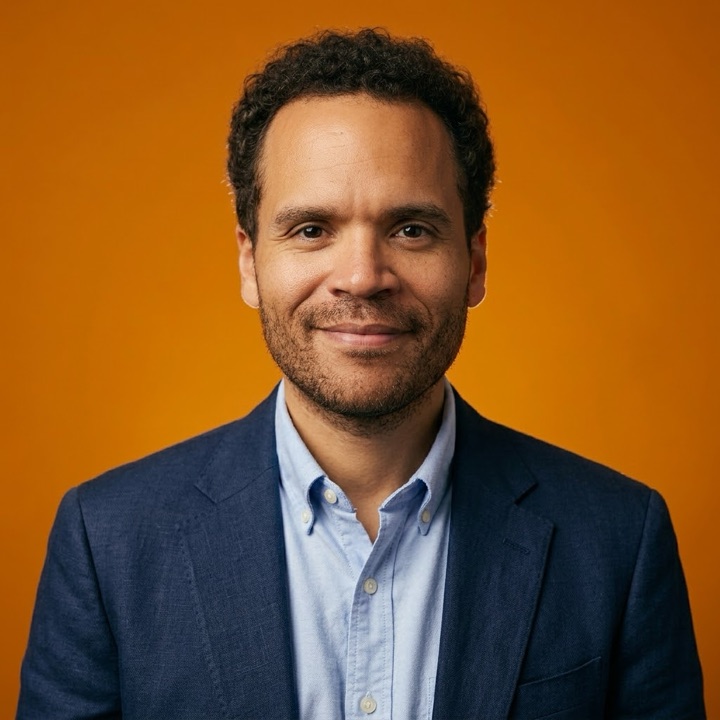
Ryan J. Smith

Ryan J. Smith is an AI product manager inside a Fortune 200 healthcare supply chain, where he leads a portfolio of supply chain AI products and is helping build the company's AI Center of Excellence. He wrote Punching Above Your Weight, a Top 10 Amazon AI New Release, and holds the MIT Professional Certificate in Designing and Building AI Products and Services.

Before AI, he ran operations for a manufacturer and led development teams, which is why Grain cares about the dock door and the SQL in equal measure. He writes production Python when the roadmap is too slow.

He lives in Chicago.

Punching Above Your Weight: How to Use AI Without Losing Your Mind. (opens in a new tab) A practical guide for people who have real work to do and would like AI to help with it.

Start a conversation.

No pitch deck, no discovery call to book a discovery call.

  1. Write what the agent should do and where it's stuck. Two paragraphs is plenty.
  2. Within two business days you get a straight read: what I'd look at first, and whether an engagement fits.
  3. If it fits, we start with the two-week diagnostic at a fixed $15,000. If it doesn't, you still have the read.

Sent to me directly. Used only to reply to you.